
Research
Around 2.2% of Nepal’s population has disabilities, including visual, intellectual, and physical impairments. A National Statistics Office report estimates that only 43.94% of people with disabilities are literate, with lower rates in rural areas due to limited access to education, accessible learning materials, and qualified teachers.
Children aged 5–12 make up 28.5% of the population, and according to the Ministry of Education, approximately 770,000 primary-age children remain out of school. Among the total students enrolled each year, 0.42% (22,380) students have disabilities. Many disabled children are unable to attend school due to a lack of awareness, inadequate support systems, and inaccessible infrastructure.
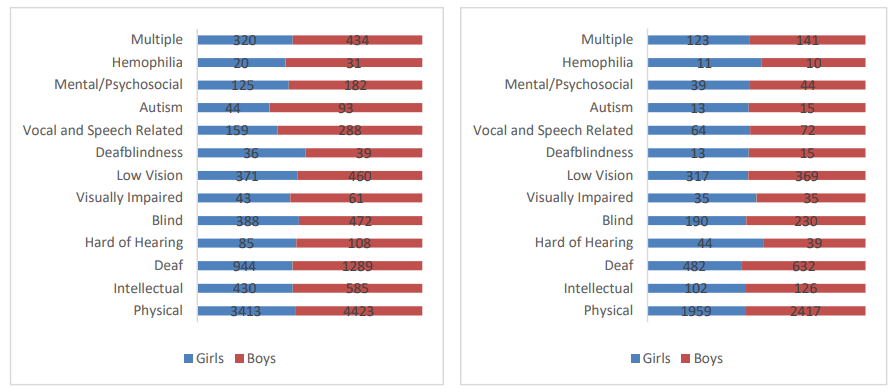
Fig: This figure shows the gender distribution of students with disabilities enrollment in school
Access to foundational education, and subjects like math, science, and computers are crucial for the development of a child. As the report shows only half of the students meet academic achievement criteria. Nepal has just 36 special schools, highlighting the urgent need for inclusive education and disability-friendly infrastructure to improve learning opportunities for all. For more details
Challenges
Over the last 20 years, Nepal has made significant progress in education. The net enrollment rate in primary schools has risen to 97%. However, the country still faces several challenges, particularly in community schools, which make up 80% of all schools and account for 72% of total enrollments.
Despite recent progress, Nepal’s education system continues to struggle with issues such as a lack of accessible resources, particularly in remote areas where infrastructure and facilities are limited. While 98.1% of teachers in primary education are trained, only half of the students meet academic achievement criteria. Additionally, only 31.9% of community schools report having access to adequate learning materials, and just 15% have a teacher’s guide. For more details
Key Challenges in Nepal’s Education System
Poor Quality Education – Despite teacher training initiatives, learning outcomes remain low.
Inequitable Access – Disparities exist between urban and rural areas, as well as between public and private schools.
Geographical Barriers – Remote and hilly regions face extreme challenges in accessing schools and resources.
Barriers to Enrollment and Attendance
Key factors preventing children from attending school include:
Poverty
Social exclusion
Disability
Migration
Child labor
Cultural and social norms
Education for Students with Disabilities
Children with disabilities face greater barriers to accessing quality education. Factors such as poverty and social exclusion make it even harder for them to enroll and continue attending school. The major challenges include:
Lack of Accessible Infrastructure
Reports indicate that Nepal has only 36 special schools dedicated to inclusive education and disability-friendly infrastructure, most of which are concentrated in urban areas like Kathmandu and Pokhara. In contrast, children with disabilities in rural and hilly regions often remain out of school due to the absence of accessible facilities and the lack of transportation infrastructure.
For many students, traveling to school is a major challenge due to poor road access. Additionally, mainstream schools often lack necessary modifications such as wheelchair ramps, accessible restrooms, and adaptive classroom furniture, making it difficult for children with disabilities to participate equally.
Lack of accessible Learning Materials
Accessible learning materials are crucial for students with disabilities, yet they remain scarce in Nepal’s education system. Different disabilities require specialized resources:
Blind students rely on braille, intelligent optical character recognition (OCR), and screen readers for digital learning.
Deaf students require sign language interpretation, visual aids, and tailored teaching methods.
Students with intellectual disabilities need simplified and structured learning approaches tailored to their specific needs.
Currently, only one-third of public schools report having access to adequate learning materials, with the situation even worse in rural areas. A lack of infrastructure—such as internet access, reliable electricity, and proper transportation—further limits the adoption of assistive technology in classrooms. Without these resources, students with disabilities struggle to keep up with their peers, leading to high dropout rates and lower educational attainment.
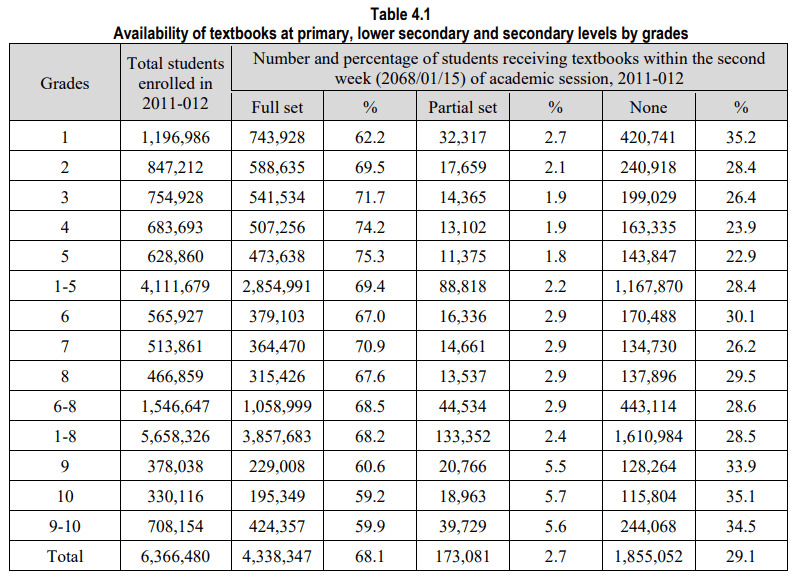
Fig: This table shows the availability of textbooks in schools
Lack of well-trained teachers
Although approximately 98% of public school teachers are trained, there is little data indicating whether they are adequately prepared to teach students with disabilities. Research suggests that only half of public school students meet academic achievement criteria, emphasizing the need for enhanced teacher training.
Teachers must be trained to provide individualized education plans (IEPs) tailored to students with different disabilities. However, with only 36 special education institutes—mostly in urban areas—many children in rural Nepal lack access to specialized teachers and inclusive classroom environments.
Moreover, inclusive education requires continuous teacher training programs that focus on modern teaching methods, adaptive learning technologies, and psychological support strategies to assist students with disabilities. Without this, mainstream teachers often struggle to accommodate diverse learning needs, further widening the educational gap.
Weak Legal and Policy Framework for Inclusive Education
Nepal has implemented various initiatives, such as:
Free education policies
Government quotas for students with disabilities
Scholarships and NGO partnerships
However, these efforts are insufficient. There is a pressing need for reforms to ensure:
Development of inclusive school infrastructure
Public awareness programs to promote accessibility
Stronger policies mandating accommodations for students with disabilities
Curriculum adjustments to include assistive learning technologies
Regular monitoring and evaluation of inclusive education programs
Lack of Awareness and Societal Stigma
Social attitudes and cultural beliefs about disability often discourage families from sending children with disabilities to school. Many parents, especially in rural areas, perceive education as irrelevant or unattainable for their disabled children, leading to high dropout rates.
Community awareness campaigns are essential to change these perceptions and ensure that all children, regardless of their abilities, have the right to education. Government agencies, NGOs, and local communities must work together to promote the benefits of inclusive education and dispel myths surrounding disability.
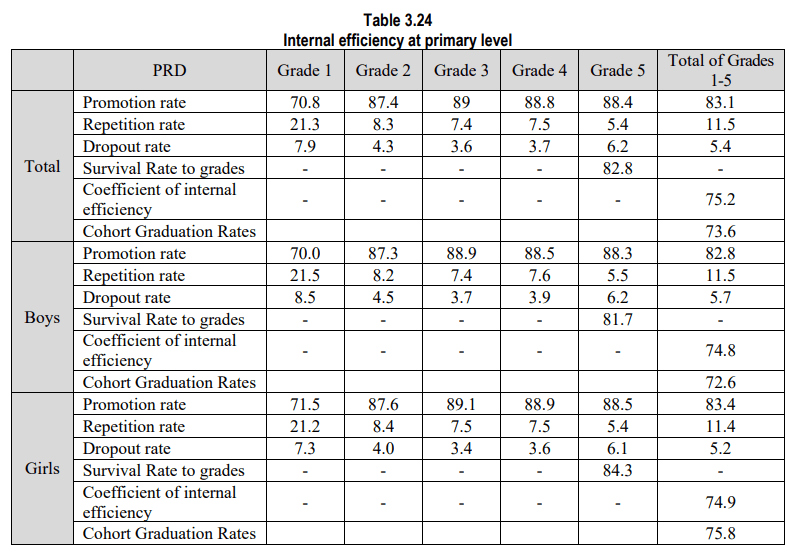
Fig: This table shows the internal efficiency at school
Conclusion
While Nepal has made progress in increasing school enrollment, significant gaps remain in providing quality education, particularly for students with disabilities. Addressing challenges related to infrastructure, learning materials, teacher training, policy enforcement, and societal attitudes is essential to making education accessible and equitable for all students. Comprehensive reforms, government initiatives, and community involvement are needed to bridge these gaps and ensure an inclusive education system for future generations.